









Concacaf Professional Football Development Seminar Brings Regional Leaders Together in Dominican Republic

Two-day seminar focused on club licensing, coaching, matchday operations, digital engagement, competitions and data-driven development
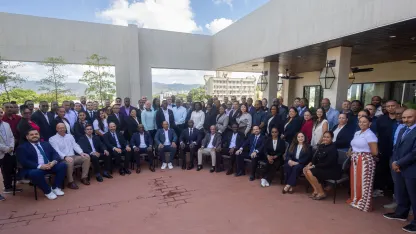
Santiago de Los Caballeros, Dominican Republic – Concacaf brought together football leaders and stakeholders from across the region for the 2026 Concacaf Professional Football Development Seminar, held this fall in Santiago de los Caballeros, Dominican Republic.
The two-day seminar provided a platform to share best practices, strengthen collaboration and continue advancing professional football standards across the Concacaf region.
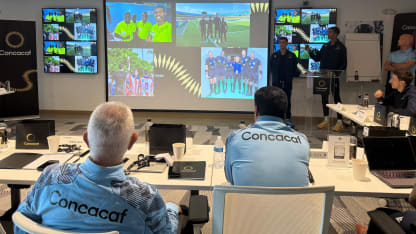
The program featured presentations, panels and case studies addressing several areas central to the continued professionalization of clubs and leagues, including club licensing, coach education, matchday operations, digital content, club competitions and the use of data and benchmarking.
The seminar opened with remarks from Federación Dominicana de Fútbol President José Deschamps and Concacaf Chief Football Development Officer Jason Roberts.
A central theme throughout the seminar was the evolution of club licensing from a compliance exercise into a broader tool for development. Presentations explored how common standards, data and benchmarking can help identify gaps and support stronger clubs and leagues, better governance, improved infrastructure, stronger coaching and player pathways, and more sustainable football organizations. The framework presented emphasized that compliance should serve as a starting point rather than the final objective of the licensing process.
The seminar also examined Concacaf’s continued work to strengthen coach education across the region. During his Pro License Development presentation, Roberts outlined the Confederation’s long-term ambitions through the Concacaf Coaching Convention, including the priority goal that “100% of coaches in Concacaf professional club competitions hold a Concacaf Pro License or equivalent by 2030.”
“Our goal is not simply to ask whether clubs and leagues meet the standard, but how we can help them become stronger,” said Jason Roberts, Concacaf Chief Football Development Officer. “That means investing in people, coaching, infrastructure, technology and data, and creating development pathways that reflect the different realities across our region.”
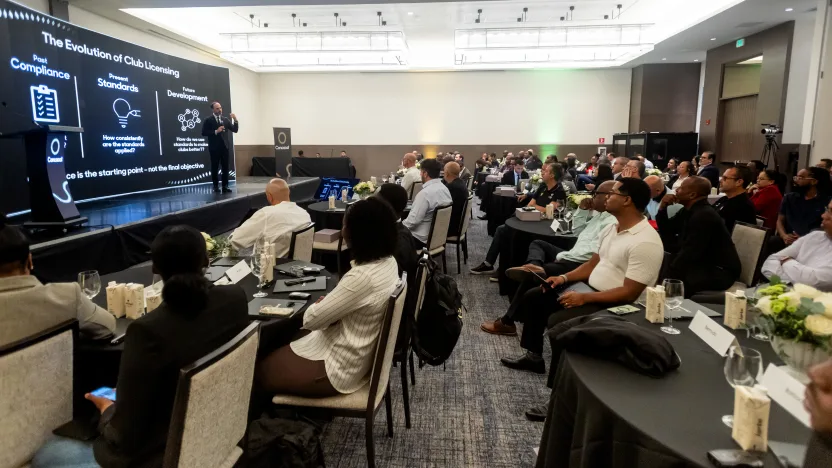
The first day featured a panel on elevating the matchday experience, covering stadium standards, venue operations and fan engagement. Moderated by Concacaf Director of Club Competitions Matias Tettamanti, the discussion included Jorge Allen, Executive Director of the Liga Dominicana de Fútbol; Roque Pascua, General Secretary of Liga Nacional de Fútbol Profesional de Honduras; and Matthew Braithwaithe, Senior Director of League Operations for the Canadian Premier League.
Participants also heard about Concacaf’s approach to digital engagement and storytelling, with the Digital Playbook session focused on building reach, strengthening relationships with fans and creating sustainable opportunities through content. Other sessions highlighted the evolution of Cibao FC and the role that professional structures, youth development, infrastructure and international competition can play in the growth of a club.
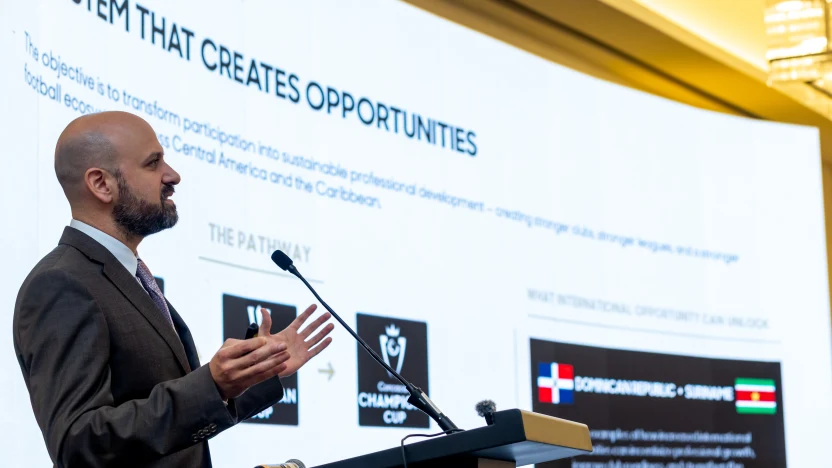
The program also looked ahead to the future of Concacaf club competitions and how expanded competitive opportunities can contribute to broader professional football development.
Day two expanded the discussion beyond the Concacaf region with a presentation on club licensing from the Asian Football Confederation, followed by a case study on the Suriname Major League. The seminar concluded with a session led by Stats Perform examining club football performance, trends and benchmarking, reinforcing the role of data in understanding progress and identifying areas for future development.
Through the Professional Football Development Seminar, Concacaf continues to create opportunities for its football community to exchange experiences, learn from different models and strengthen the structures supporting professional clubs and leagues across the region.